books books books!

welcome to my library :)
I usually also use storygraph to keep track of things


novels:

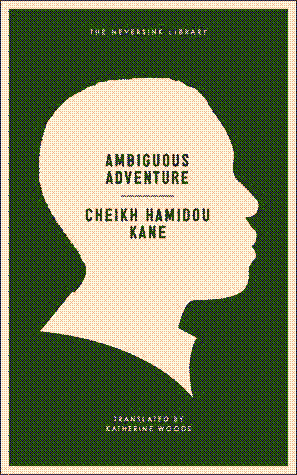
Ambiguous Adventure
Cheikh Hamidou Kane
1961

This was recommended to me by a professor of one of the most important classes I ever took, Comparative Literatures in Triest, but I read it a couple of years later. It's the story of a boy, Samba Diallo, born in what today is known as Senegal. He is the son of the cheif of the village and of the Diallobé people, and is entrusted to a Koranic teacher since a very young age, by his father. The protagonist gets sent in Paris to study philosophy, when the Diallobé realize that the people from Europe are coming: he comes to understand western culture as well, and find himself stuck halfway in between his Diallobé culture and Islamic teachings, and the western way of life.

The narration of the book is a dialogue between these two paths, and a boy caught in the middle, trying to make sense of himself, and to understand where he stands, between his tradition and home, who is about to disappear due to foreign cannons, and the culture he has come to understand, yet will never accept him fully as a part of itself.

The ending is harsh, but disarmingly meaningful, in its tragic irony.

"I come here to say this to you: I, the Most Royal Lady, do not like the foreign school. I detest it. My opinion, nevertheless, is that we should send our children there."

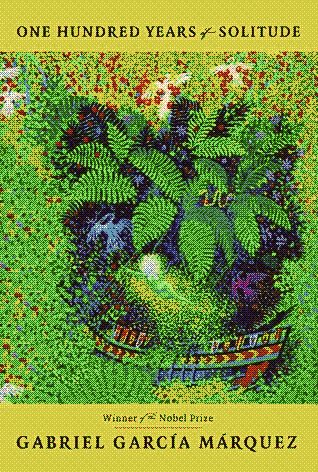
One Hundred Years of Solitude
Gabriel García Márquez
1967

This too was recommended to me by the Comparative Literatures course, and this is the one I decided to write a thesis on. This one stuck with me for the wave-like structure of time, the crucially mundane magical realism, the complex reality of a big and ancient family, and seeing the village Macondo, constructed with such care and full of so many stories and people, be washed away by time, and the wheel of history and oppressors.

"Many years later, as he faced the firing squad, Colonel Aureliano Buendìa was to remember that distant afternoon when his father took him to discover ice."

back to top


short story/ies:

101 Zen Stories
adapted by Nyogen Senzaki and Paul Reps

This one I found in Triest, while practicing martial arts. These stories are sometimes very silly, sometimes very mundane and but the meanings they hold are wise, and stuck with you for a long time. I've come to understand that you can learn from anything, even from a log on the ground.

Nan-in served tea. He filled the cup of his host and kept pouring.
The professor looked at the overflowing tea, and could no more contain himself.

"It's full to the brim! It can hold no more!"
"Like this cup," said Nan-in, "you are full of your opinions and conjectures.
How can I teach you Zen, if you first don't empty your cup?"

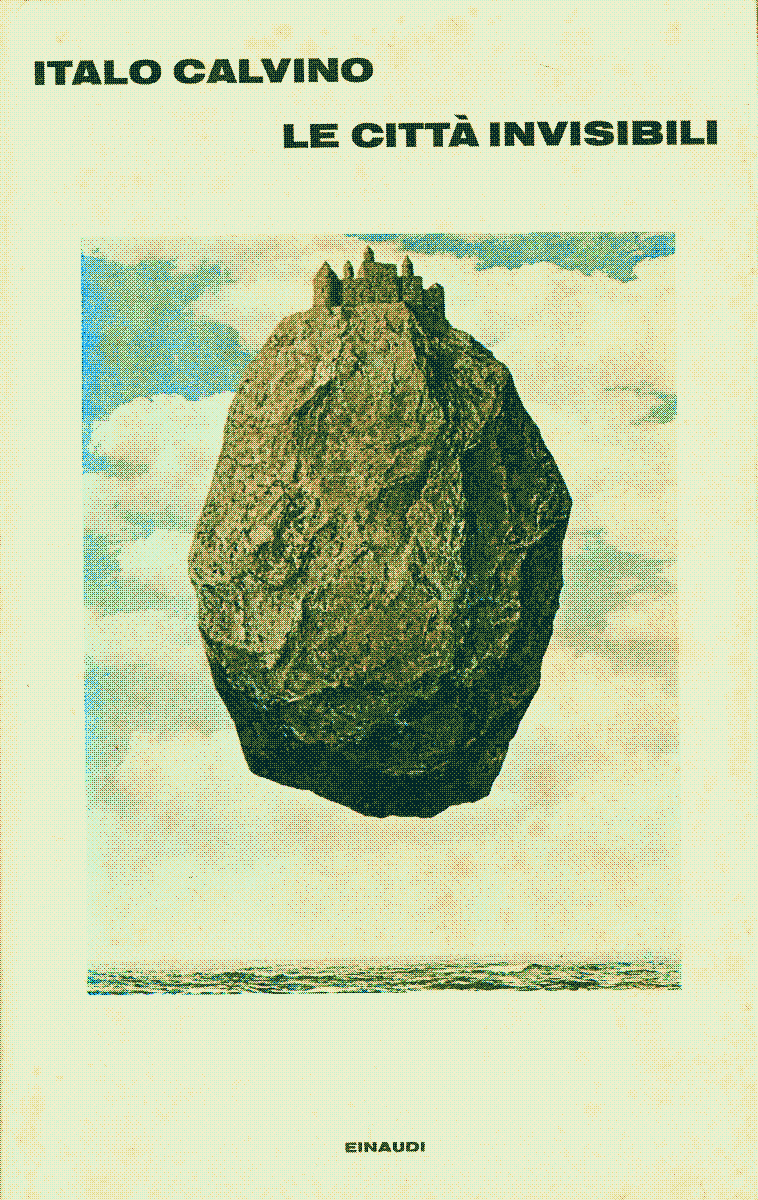
Le Città Invisibili (The Invisible Cities)
Italo Calvino
1973

This one was very important to me all through high school, and it still sticks with me. I see shards of it very often. A city can be many things. It's where humans gather, after all.

The hell of the living is not something which will be, if there is one, it's what is already here, it's the hell which we have every day, the shape of which we create by being together. There are two ways not to suffer from it. The first one is easy to most: accept the hell and become one to the point of not seeing it anymore. The second one is risky, and requires constant attention, and learning: looking for, and recognizing who and what, in the midst of this hell, is not hell, and make it last, and give it space.

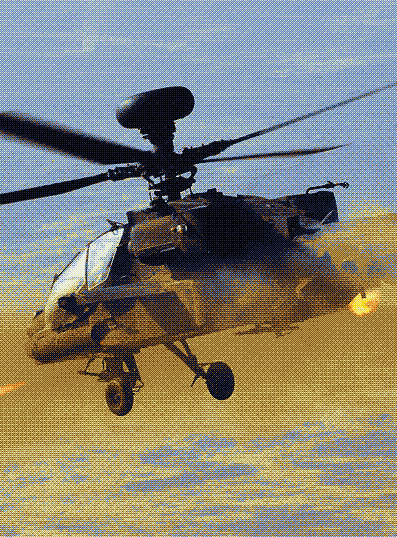
I Sexually Identify as an Attack Helicopter
Isabel Fall
2020

Man I just really like this story. It's pretty short and ingenious. For those who don't know it, this short story is narrated by the protagonist- code name Barb (not a short for Barbara)- whose gender has been artificially engineered by the army to be that of an attack helicopter. Yes, really. And yes, it thematically works. It's a spectacular satire on the military complex and a reflection on gender and gender roles told with cigarette-ashed rough irony and grace and despair-chuckle hope. I like it.

Generations of queer activists fought to make gender a self-determined choice, and to undo the creeping determinism that said 'the way it is now is the way it always was and always must be'.
Generations of scientists mapped the neural wiring that motivated and encoded the gender choice.
And the moment their work reached a usable stage—the moment society was ready to accept plastic gender, and scientists were ready to manipulate it—the military found a new resource. Armed with functional connectome mapping and neural plastics, the military can make gender tactical.
[...]
The gender networks are old and well-connected. They
work.

back to top


theatre:

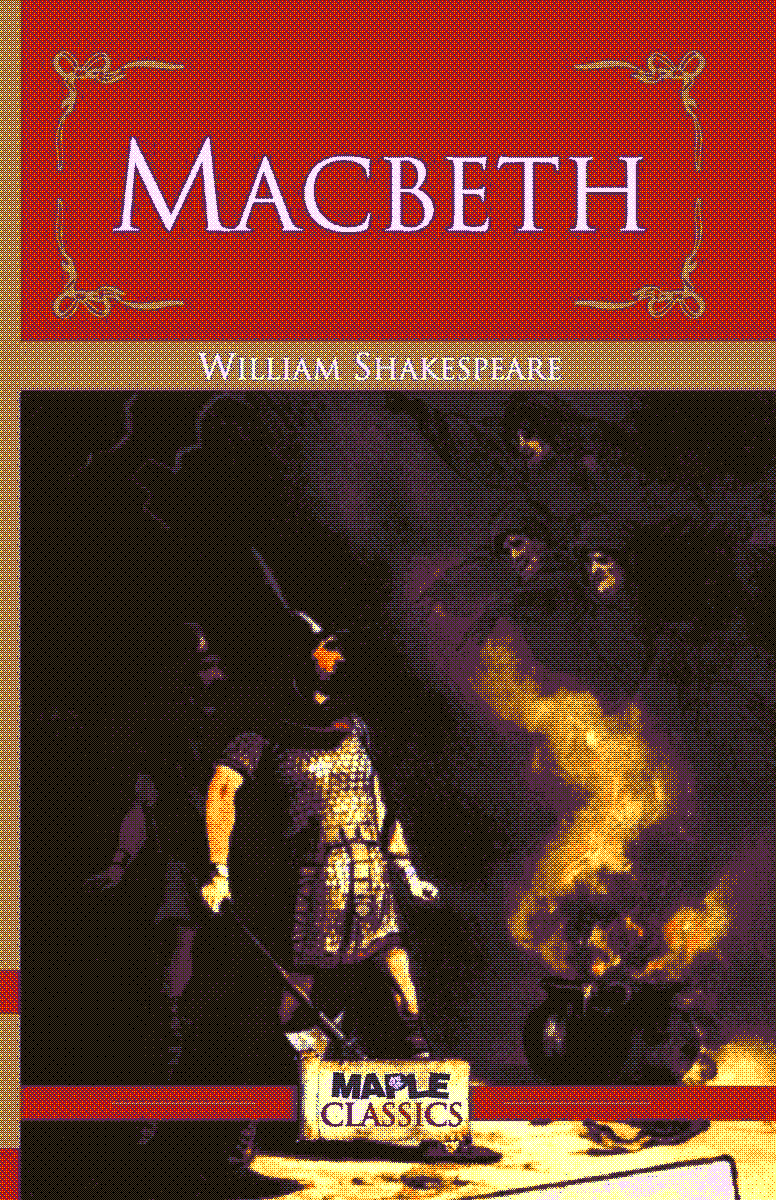
Macbeth
William Shakespeare
~1606

Shakespeare has been a long time favourite of mine, and this is one of my favourite works of his. I've read it many times. Many things attract me to this work, such as the medieval-ish setting, the description of the struggle for power, Lady Macbeth and her unabashed witch-like qualities, the supernatural and the horror blending into the narrative, the fact that it reminds me of the Oresteia. (I've always been a hopeless sucker for (fictional) tragedies.)

"Be this the whetstone of your sword. Let grief / Convert to anger. Blunt not the heart; enrage it."

back to top


non-fiction:

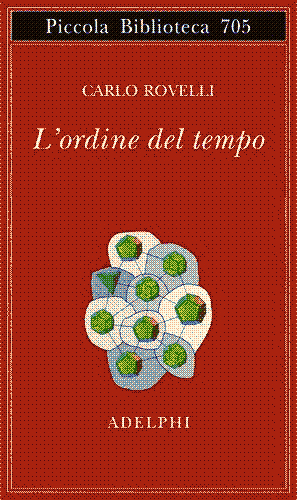
ordine del tempo by Carlo Rovelli

L'Ordine Del Tempo (The Order of Time)
Carlo Rovelli
2017

I have read this in 2017 while young and dumb and on a schooltrip and I think it permanently scrambled my perception of time and my ability to be normal about it. It left me perpetually hungry for so many different answers to the question "What is time?". My copy of it is all messed up and the cover is half ruined and it still has the feather of my old roommate's parrot in it as bookmark.

"⧖ ⋈ ⧖ ⋈ ⧖ ⋈ ⧖ ⋈ ⧖ ⋈ ⧖ ⋈"

Rage Inside the Machine by Robert Elliot Smith

Rage Inside the Machine
The Prejudice of Algorithms, and How to Stop the Internet Making Bigots of Us All

Robert Elliot Smith
2019

Still halfway through, but this I can say: this book does a great job in making people aware of the biases which are intrinsic to many algorithms and data mining methods and statistics and machines today. These things are not neutral, there is no such thing. Before reading this, I didn't know statistics was born out of eugenetics. This, among many other things, such as the horror of the concept of normalization. I think this book tackles well the links between the world we have now, and the origins of its mechanisms.

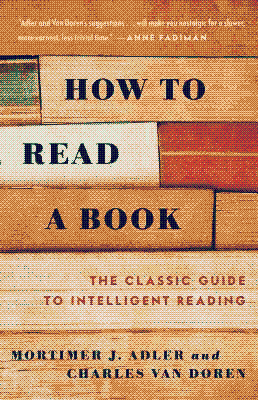
How to Read a Book

How to Read a Book
The classic guide to intelligent reading
Mortimer J. Adler and Charles van Doren
1940 1st ed. - 1972 2nd ed.

Solid book for people getting into reading at any stage of their lives, or at any stage of reading expertise. There is much I don't like in this book, but I think the purpose that the authors pursued by writing it and the things you can learn by reading it surpassed my dislike of the authors' own opinions in my enjoyment of it. It is not unlike a class by a professor you don't really like which gives you somewhat obnoxious rules which you will scoff at, yet make use of (some of them) in the future, taking your own creative spin on them. There's some academic irony and frankness in it too.

"This is a book for readers, and for those who wish to become readers. Particularly, it is for readers of books. Even more particularly, it is for those whose main purpose in reading books is to gain increased understanding.

back to top


Epics:

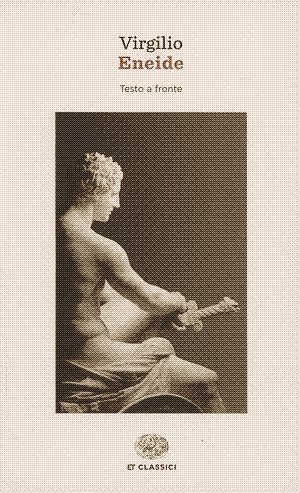
Aeneid
Virgil
29 - 19 BC

I picked this up and put this down so many times, yet every time I learned something new, or it gave me something new to ponder on. There is much which stuck with me of this Epic: Dido and her kindness, Aeneas and his inhumane devotion to Fate, Palinur and the unus-pro-multis sacrifice that the Gods take of him, the tragedy of Turnus (and Juturna), the relationship of Aeneas and the Gods, Aeneas' terrible fury. (I must add it also becomes so interesting if you imagine Aeneas (and Turnus, too) as a butch lesbian.)

"Tantaene animis caelestibus irae?"
[...]
"Tantae molis erat Romana condere gentem."

back to top